
Ceramic Jewelry Workshop in Toronto
Last updated: April 26, 2026.
The short version
What: A 2.5-hour beginner Ceramic Jewelry workshop. Real porcelain, kiln-fired by us — not polymer, not metal clay.
Take-home: 6–8 finished pieces (earrings, pendants, charms) with the hardware of your choice.
Price: $99 per person. All materials and hardware included.
Where: 4909 Yonge Street, Unit 2 — a 2-minute walk from Sheppard-Yonge station in North York, Toronto.
What is the Ceramic Jewelry workshop in Toronto?
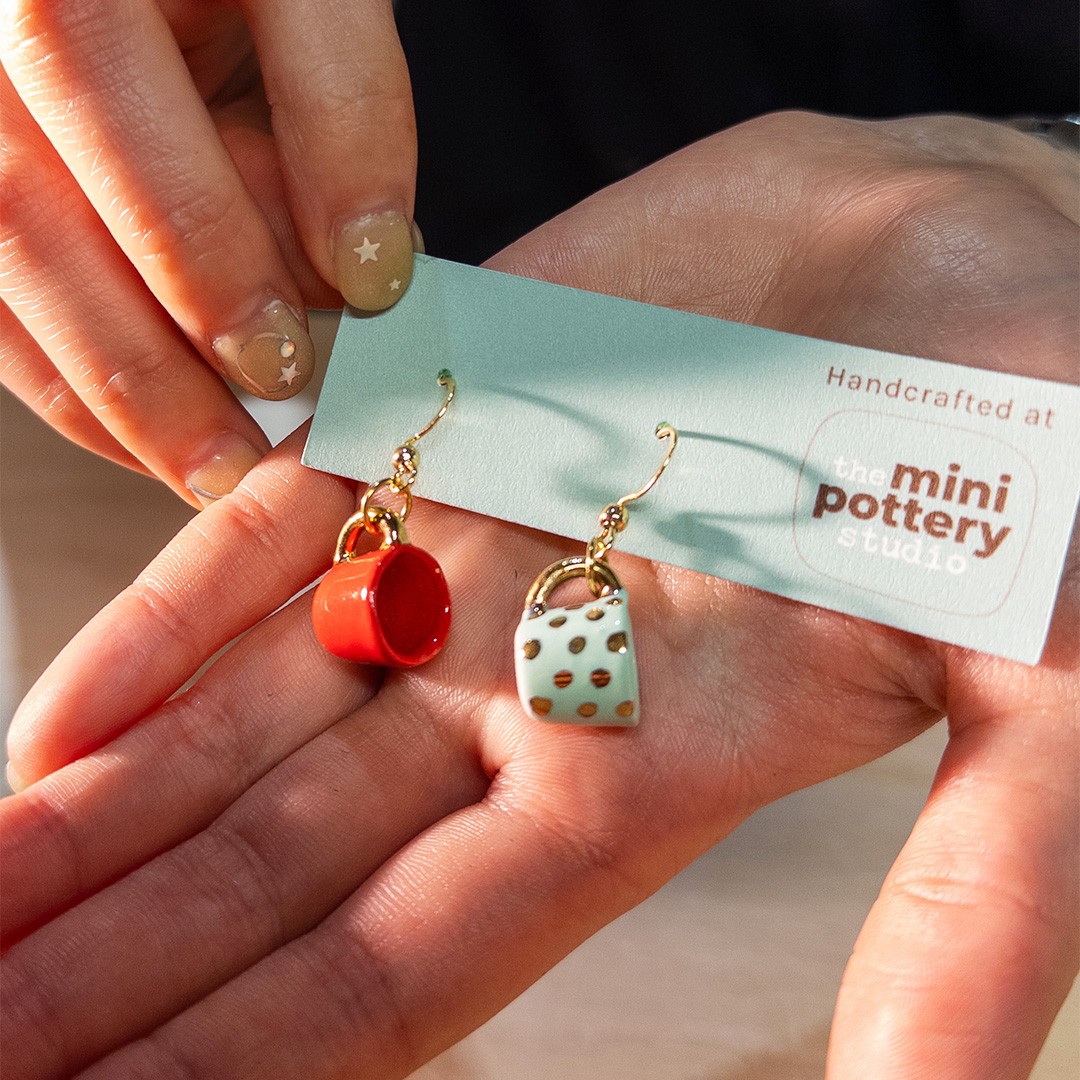
The Ceramic Jewelry workshop is a 2.5-hour beginner class where you shape, cut, and texture porcelain into wearable pieces — earrings, pendants, and small charms. We handle the kiln firing, glazing, and final assembly with your chosen hardware after class. You walk in with no clay experience and walk away (a few weeks later, once everything is fired and assembled) with 6–8 finished pieces. The workshop runs at Mini Pottery Studio in North York and costs $99, all materials included.
It's the only ceramic jewelry workshop in Toronto we know of where the pieces are real porcelain and kiln-fired in studio. Most "clay jewelry" classes in the city are either polymer clay (Sculpey/Fimo, baked in a home oven) or metal clay (PMC, requiring soldering and firing skills). This one sits in its own category.
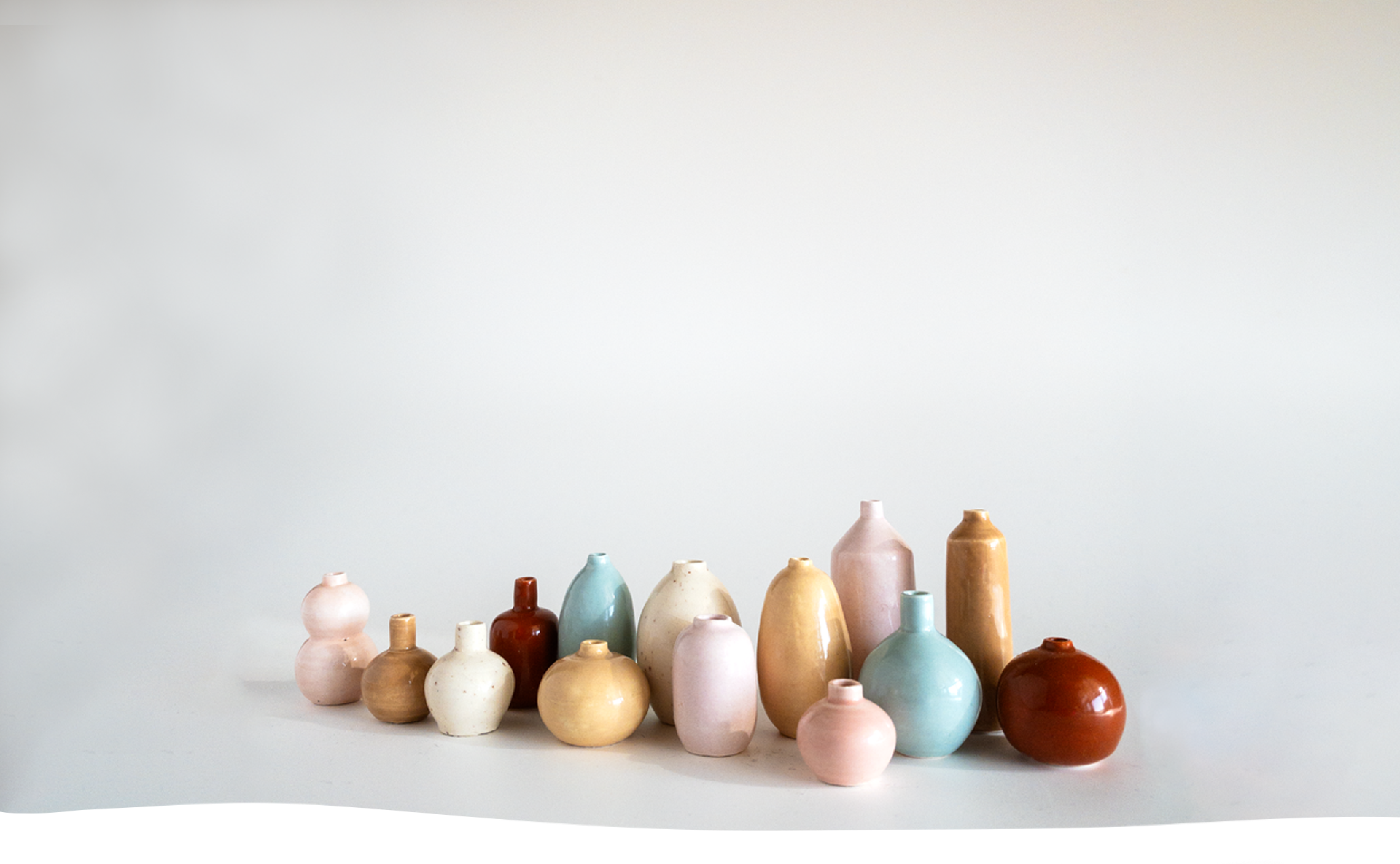
Mini Pottery Studio is Toronto's first studio focused on mini ceramics, and the Ceramic Jewelry workshop is the studio's small-format approach applied to wearable porcelain. The workshop is designed and taught by Cielo Vianzon, MPS co-founder and miniaturist artist — featured on Netflix's Best in Miniature with brand commissions for Sephora Canada, Zara Home, Fenty Beauty, and Heineken US. Tiny-format ceramic is the through-line of Cielo's practice; the workshop is a translation of that practice into something you can leave with in a single afternoon.
If you have a specific finished piece in mind, see the spoke guides: make your own earrings in Toronto, make your own necklace, or make your own bracelet. For a comparison against silver, metal-clay, and glass workshops in the city, see Make Your Own Jewelry in Toronto: 9 Workshops Compared.
How is ceramic jewelry different from polymer clay or metal jewelry?
Ceramic jewelry is porcelain that gets fired in a kiln at over 1,200°C — it becomes glassy, hard, and lasts indefinitely. Polymer clay is a plasticised resin baked at home oven temperatures (around 130°C); it's cheaper and easier, but softer, scratch-prone, and behaves like a tinted plastic. Metal clay (often called PMC or precious-metal clay) is silver dust suspended in binder — it fires off the binder to leave solid silver, but the technique looks and feels like metalsmithing, with soldering, polishing, and torchwork.
This matters because most Toronto SERP results for "clay jewelry class" are actually metal-clay classes. If you're searching for the look of museum-quality ceramic jewelry — translucent porcelain, glassy glaze, hand-textured surface — you want a kiln-fired ceramic workshop, not polymer or metal.
Quick comparison of the three formats Toronto searchers run into:
Format | How it's hardened | Skill needed | Result feel | Typical Toronto class |
|---|---|---|---|---|
Porcelain (ceramic) | Kiln-fired at over 1,200°C, glazed, fired again | None — beginner-friendly | Hard, glassy, lightweight, holds detail | MPS Ceramic Jewelry — $99, 2.5 hours, 6–8 pieces |
Polymer clay | Baked in home oven, ~130°C | None — but you finish at home | Soft, plastic feel, can scratch | Mostly DIY — Etsy kits and YouTube tutorials |
Metal clay (PMC) / silversmithing | Kiln or torch, sometimes soldered | Moderate — torchwork, polishing | Solid silver, jewelry-shop weight | ~$150–$200, 3–4 hours, 1 pair |
What you actually make in 2.5 hours
You make 6–8 finished porcelain pieces in a single session. The class moves through three stages — shape, cut and texture, choose hardware. You leave the studio empty-handed; you come back a few weeks later to finished pieces.
Here's how the time breaks down:
0:00–0:20 — Apron on, Cielo walks through the porcelain, the tools, and a few example pieces (last cohort's earrings, a pendant, a charm).
0:20–1:30 — You roll out porcelain slabs and cut shapes. Most students make a couple of matched earring pairs, a pendant or two, and a few small charms. Texture is added with stamps, lace, leaves — anything that prints.
1:30–2:15 — Refine edges, pierce the holes for hardware, double-check that pairs match.
2:15–2:30 — Pick your hardware. Hooks, posts, chains, and jump rings are laid out for you to choose from. Tag your tray with your name.
After class, the studio bisque-fires the pieces, applies the glaze you chose, fires again, and assembles each piece with the hardware you picked. Total turnaround is about 3–4 weeks. You'll get an email when your tray is ready for pickup. (For more on what's happening between class and pickup, see our beginner's guide to glazing and firing pottery.)
What is the Premium Gold Lustre add-on?
Premium Gold Lustre is a real-gold finish applied as a third firing, after the regular glaze fire. It's not paint — it's actual gold suspended in a medium that bonds to the porcelain in the kiln. Add it at checkout or on the day, and we'll apply gold detail to whichever pieces you choose: an edge, a dot, a line, a ring around a charm.
Two things to know: gold lustre kiln loads go in less frequently than regular glaze loads, so pickup runs a little longer than the standard 3–4 weeks. And the gold needs gentle handling — no abrasives, no ultrasonic cleaners. The look is delicate, not heavy gilt.
Who the Ceramic Jewelry workshop is for
The class is built for people with no clay or jewelry-making experience. The instructor walks you through every step. The shapes you cut, the texture you add, the glaze and hardware you pick — those are choices, not skills.
Gift buyers who want an experience gift that produces wearable mementos rather than another physical object.
Friend duos and small groups who've done dinner-and-a-movie too many times and want something hands-on for a Saturday afternoon.
Hobbyists tired of polymer clay — you've made polymer earrings, you want the real thing.
People with sensitive ears — porcelain itself is hypoallergenic, and the workshop uses surgical-steel hooks and posts.
Kids: the Kilnfire listing doesn't set a hard minimum age, but the work involves small tools and fine motor control — best fit for ages 12 and up in practice. Email info@minipotterystudio.com to confirm before booking a younger student.
How much does a ceramic jewelry workshop cost in Toronto?
The MPS Ceramic Jewelry workshop is $99 for 2.5 hours, with all materials, glazing, firing, hardware, and assembly included. Toronto pottery class prices range from about $35 to $200+ depending on format; jewelry-specific classes elsewhere in the city are mostly silver and metal-clay workshops priced from around $150 to $200 and produce a single pair of earrings. The take-home count of 6–8 pieces is what makes the $99 land differently — you're effectively paying $12–$16 per finished piece.
Workshop | Material | Duration | Price | Pieces home |
|---|---|---|---|---|
MPS Ceramic Jewelry | Porcelain (kiln-fired) | 2.5 hours | $99 | 6–8 |
Harbourfront Centre — Make Your Own: Simple Earrings | Sterling silver | 3 hours | $190 | 1 pair |
Polymer-clay home kit (Etsy / Sculpey) | Polymer clay | Self-paced | $25–$60 | Varies — you supply hardware |
Where to find us
Mini Pottery Studio is at 4909 Yonge Street, Unit 2, in the Willowdale neighbourhood of North York — about a 2-minute walk from Sheppard-Yonge station on the Yonge corridor. The studio is on the second floor; look for the sign on the east side of Yonge. Free street parking is usually available on weekends. Most students take the TTC; the door-to-subway-platform walk is shorter than waiting for a stoplight on Yonge.
"This class was the perfect creative escape — the studio felt warm and inviting." — Google review
Frequently asked questions
Is ceramic jewelry the same as polymer-clay earrings?
No. Polymer clay is a plastic baked at low temperature in a home oven — softer, scratch-prone, and lighter in feel. Ceramic jewelry is real porcelain fired in a kiln at over 1,200°C — harder, glossier, and behaves like a tiny piece of pottery. Polymer-clay earrings dominate Etsy and Instagram because they're easy to ship and produce; kiln-fired porcelain is rarer.
How many earrings or pendants will I take home?
Typically 6–8 finished porcelain pieces — a mix of earrings, pendants, or small charms depending on what you make. That's higher than any other Mini Pottery Studio class because the pieces are small. You choose your jewelry hardware (hooks, posts, chains) at the end of class, and we assemble after firing.
Do I need any clay or jewelry-making experience?
No. The Ceramic Jewelry workshop is built for beginners — no prior clay or jewelry experience needed. The instructor walks through shaping, cutting, and texturing. Hardware is added by the studio after firing, so you don't handle any tools or techniques outside the porcelain itself.
Will my ceramic earrings be heavy?
Porcelain at this scale is light — most pieces fire to a few grams. Earrings are noticeably lighter than equivalent stoneware or polymer-clay pieces of the same size. We use surgical-steel hooks and posts as standard, which most people with sensitive skin tolerate.
Can I make matching earring pairs?
Yes — most students make at least one matched pair. The instructor demonstrates how to cut paired shapes from a slab so they fire to roughly the same size. Hand-cut pieces will never be perfectly identical, which is part of the look.
What is the Premium Gold Lustre add-on?
A real-gold finish applied as a third firing after the regular glaze fire. It adds metallic detail to part of the piece — an edge, a dot, a line. Available at checkout or on the day. The gold-lustre kiln load goes in less frequently, so pickup runs longer than the standard 3–4 weeks.
Where exactly is the studio?
4909 Yonge Street, Unit 2 — a 2-minute walk from Sheppard-Yonge subway station, in the Willowdale neighbourhood of North York, Toronto. We're on the Yonge corridor, on the east side of the street.
The short version, again
Ceramic, not polymer, not metal — real porcelain, kiln-fired by us.
$99, 2.5 hours, 6–8 finished pieces with the hardware you choose.
Beginner-friendly. No clay or jewelry experience needed.
Ready to book? See upcoming sessions and reserve your spot for the Ceramic Jewelry workshop. If you're new to MPS and curious how a class actually runs, our guide to what to expect at your first pottery class walks through the studio routine. And if you're weighing whether handbuilding (which the jewelry workshop is) suits you better than the wheel, our handbuilding vs. wheel-throwing comparison is the right place to start. To browse every class we run, see our full class catalogue.