
You booked a pottery class. Or you're about to. Either way, the same questions are running through your head: Will I be terrible? What do I wear? What actually happens? Do I need to bring anything?
Here's the honest answer: you will not be great at pottery on your first try. Your piece will be wobbly. That's normal, and it's part of why it's fun. Here's everything else you need to know.
What Actually Happens in a Pottery Class
Every studio runs things slightly differently, but the general flow is the same. Here's a realistic timeline based on a typical 2- to 2.5-hour beginner class.
Arrival (10 Minutes Before)
Show up a few minutes early. You'll find your station, put your things down, and get settled. Studios are usually small — don't expect a warehouse. At The Mini Pottery Studio in North York's Willowdale neighbourhood, classes max out at 10 people in a cozy space on the Yonge corridor, a short walk from Sheppard-Yonge station.
The Demo (15-30 Minutes)
Your instructor demonstrates the technique you'll be learning — either wheel throwing or handbuilding, depending on the class. They'll show you hand positions, pressure, speed, and what the finished product should roughly look like. Pay attention here. This is the most valuable part.
Hands-On Time (1.5-2 Hours)
Then it's your turn. You'll sit at a wheel or a worktable and start working with clay. This is where reality hits: clay does not behave the way it does on Instagram reels. It wobbles. It collapses. Your first piece might look nothing like what the instructor made.
That's fine. Everyone's first piece looks like that. The instructor walks around the room helping people, correcting hand positions, and occasionally rescuing a piece that's about to fall apart. By your second or third attempt, you'll start to feel the rhythm.
Wrapping Up (Last 15 Minutes)
You choose which pieces to keep. The studio handles the rest — trimming, glazing, and firing your pieces in a kiln. This process takes 3 to 4 weeks. You'll come back later to pick up the finished product, which will look completely different from the soft clay you left behind. Our glazing and firing guide explains what happens during those weeks.
What to Wear to a Pottery Class
This is the most-searched question about first pottery classes, and the answer is simple: wear clothes you don't mind getting dirty.
Do | Don't |
|---|---|
Old t-shirt or top you're OK staining | Silk, cashmere, or dry-clean-only fabrics |
Short or rolled-up sleeves | Loose, flowing sleeves that drag through clay |
Closed-toe shoes | Open sandals (clay drips) |
Hair tied back | Hair hanging in your face and clay |
Short, trimmed nails | Long nails (they gouge the clay and block fingertip contact) |
Comfortable pants you can sit in | Tight jeans that restrict movement |
Toronto-specific tip: If you're coming in winter, you'll be wearing layers. Most studios are small — plan for limited coat storage. Wear something you can strip down to, and bring a bag for your scarf and gloves so they don't end up dusted with clay.
Clay washes out of most fabrics, but it leaves a faint stain on light colours. Stick with darker clothes if you're worried.
What to Bring (and What You Don't Need)
What to Bring | What the Studio Provides |
|---|---|
Yourself | All clay and materials |
Trimmed nails | All tools (ribs, wire, sponges, etc.) |
Clothes you can get dirty | Aprons (most studios) |
A willingness to be bad at something | Glazing and firing after class |
You don't need to buy anything in advance. No clay, no tools, no apron. Studios include everything in the class price.
What Will I Actually Make?
Depends on the class type.
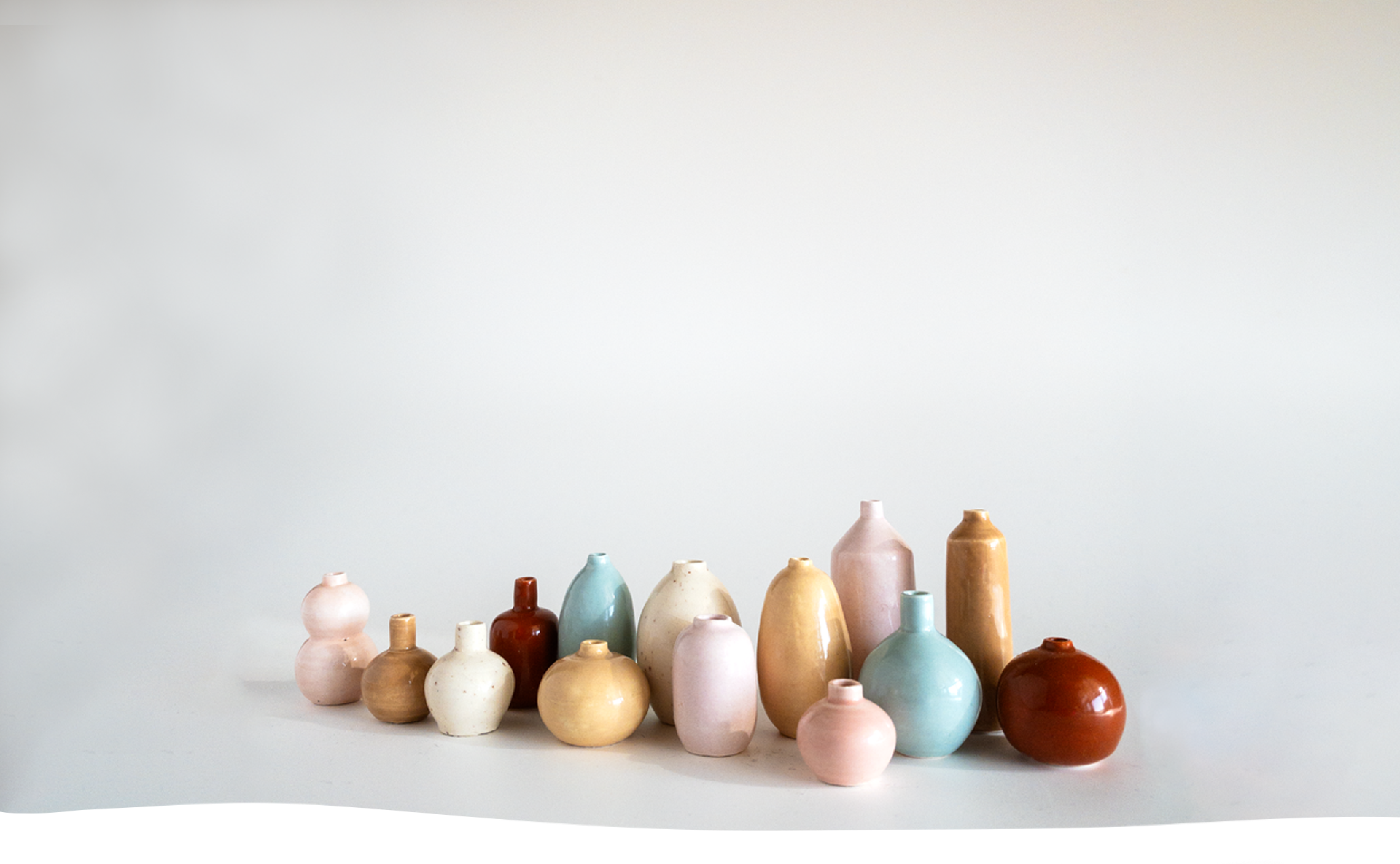
Wheel throwing: Small vessels — cups, bowls, small vases. On a mini pottery wheel (like at The Mini Pottery Studio), you'll make pieces from pinkie-height to espresso cup size and typically finish 3-5 pieces in a session. On a full-size wheel, expect 1-2 pieces and more time spent learning to centre the clay. Read more about what a mini pottery wheel class involves.
Handbuilding: More control over the final shape. You might make a mug (slab-building technique), a matcha bowl (pinch technique), or free-form pieces like planters and dishes. Handbuilding is slower, more meditative, and generally less messy.
Not sure which technique is right for you? We wrote a full comparison of handbuilding vs. wheel throwing.
How Much Do Pottery Classes Cost in Toronto?
Pricing varies a lot depending on the studio, class type, and what's included. Here's a realistic range:
Studio | Class Type | Price | Duration | Location | Includes Firing? |
|---|---|---|---|---|---|
The Mini Pottery Studio | Mini wheel throwing | $99 | 2.5 hrs | North York (Sheppard-Yonge) | Yes — glazing + firing included |
The Mini Pottery Studio | Handbuilding (matcha bowl or mug) | $79 | 2.5 hrs | North York (Sheppard-Yonge) | Yes — glazing + firing included |
Clay With Me | Wheel throwing | $90-110 | 2 hrs | Downtown (Queen W) | Yes |
Pottery Lab | Wheel throwing | $95 | 2 hrs | Downtown | Yes |
Gardiner Museum | Drop-in clay | $20-35 | 1.5 hrs | Bloor/Bay | No — air-dry only |
Spin Pottery | Wheel throwing | $80 | 2 hrs | Vaughan | Yes |
Most studios in Toronto charge between $75 and $120 for a beginner workshop, with all materials and firing included. The Gardiner Museum is the exception — cheaper, but you're working with air-dry clay (not kiln-fired), so your piece won't be food-safe or as durable.
If you're comparing options, the key questions to ask are: does the price include firing and glazing? How many pieces do you keep? Is it kiln-fired or air-dry?
What Happens After Class?
This is the part most "what to expect" articles skip — and it's where the surprise often lives.
Your pieces don't go home with you the same day. Here's the typical timeline:
You leave class with soft, unfired clay pieces sitting on a shelf.
The studio dries them slowly over several days (fast drying causes cracks).
First firing (bisque) — the kiln reaches about 1,000°C, turning soft clay into hard ceramic.
Glazing — the studio applies a food-safe glaze coat (some studios let you do this yourself).
Second firing (glaze) — back in the kiln at even higher temperature. The glaze melts into a smooth, glossy surface.
Pickup — you come back 3-4 weeks later to collect your transformed piece.
That 3-4 week wait is agonizing the first time. But the moment you pick up your piece and see the dull, chalky clay transformed into something smooth and glossy — that's the moment most people get hooked.
5 Honest Tips for Your First Pottery Class
Lower your expectations dramatically. Your first piece will not look like the ones on Pinterest. It might not even look like a cup. That's normal and completely fine.
Trim your nails. This is the tip nobody mentions until you're sitting at the wheel with acrylics, unable to feel the clay. Short nails make a huge difference.
Ask questions during the demo. Instructors expect them. "How hard do I press?" and "What do I do when it wobbles?" are the two most common — and the two most useful.
Don't compare yourself to the person next to you. Someone in your class will make something beautiful on their first try. Ignore them. Your experience is your experience.
The imperfections are the point. A slightly lopsided bowl, a thumbprint in the handle, an uneven rim — these are what make handmade pottery handmade. Embrace the wobble.
What If I Love It? (The Progression Path)
Most people walk out of their first pottery class wanting to do it again. Here's what the typical path looks like at The Mini Pottery Studio — though every Toronto studio has some version of this:
Taster Class ($99) — mini wheel throwing, beginner-friendly, make 3-5 pieces
Try a different technique — matcha bowl (pinching) or mug workshop (slab building) to explore handbuilding
Multi-week course — the Matcha Set 2-week course ($159) goes deeper, including learning to glaze
Open Studio — self-directed sessions ($39) for practice once you know the basics
Membership — ongoing access for regular practice at a lower per-session cost
The jump from "I took one class" to "this is my hobby" happens faster than you'd think. Pottery is addictive that way.
Coming with a Partner? Try a Clay Date
If your first pottery class is with a partner, the studio runs a dedicated Clay Date for 2 ($200 per couple). It's an intimate session — max 5 couples — on mini pottery wheels. You'll make pieces together and keep 4 as a pair. It's one of the most booked classes in Toronto and regularly has waitlists.
Frequently Asked Questions
Do I need any experience for my first pottery class?
No. Beginner classes are designed for people who have never touched clay. Your instructor will demonstrate everything and guide you step by step. Most people in any given class are first-timers.
Is pottery hard for beginners?
Wheel throwing has a learning curve — centering clay on a full-size wheel is genuinely tricky. Mini wheels and handbuilding are more forgiving. Either way, the class is structured so you'll finish at least one piece regardless of skill level.
How long does a pottery class take?
Most beginner classes in Toronto run 2 to 2.5 hours. That includes the instructor demo, hands-on time, and cleanup. Plan for about 3 hours including arrival and departure.
Can I go to a pottery class alone?
Absolutely — many people do. Studios are small and social. You'll be working alongside other beginners, and the shared experience of everyone's first wobbly pot creates its own camaraderie.
What if my pottery breaks or collapses during class?
You start over. You'll have enough clay and enough time to make multiple attempts. The instructor will help you salvage what can be saved and start fresh when needed. This is expected, not a failure.
Can I bring my kids?
Depends on the studio and class. At The Mini Pottery Studio, the Taster Class accepts ages 8+ with a participating parent. Handbuilding classes (matcha bowl, mug) require ages 12+. Check the age policy before booking.
How do I book a pottery class in Toronto?
Most studios use online booking — check their website for available dates and times. Popular times (weekend afternoons, Friday evenings) fill up fast, so booking 1-2 weeks ahead is a good idea. Browse Mini Pottery Studio's schedule here.
Ready to Book Your First Class?
The hardest part is deciding to go. Everything after that — the instructor, the clay, the technique — is handled for you. Show up, get your hands dirty, and see what happens.
Book a Beginner Taster Class →
Want to see all available classes, including handbuilding, date nights, and open studio sessions? Browse all classes.