
Mini Pottery Wheel Class in Toronto: What to Expect and Why It's Perfect for Beginners
A mini pottery wheel spins just like a full-size one — but everything is smaller. The wheel, the clay, the pieces you make. And that's exactly what makes it less intimidating and more fun, especially if you've never touched clay before.
Mini pottery wheel classes are popping up across North America, but if you're in Toronto, there's only one studio built entirely around them. Here's what a mini wheel class actually involves, what you'll make, and whether it's the right fit for you.
What Is a Mini Pottery Wheel?
A mini pottery wheel is a compact, tabletop version of the large floor-standing wheels you've seen in movies (or on that one pottery TikTok). The wheel head is smaller — roughly the size of a drink coaster — and the clay you work with is scaled down to match.
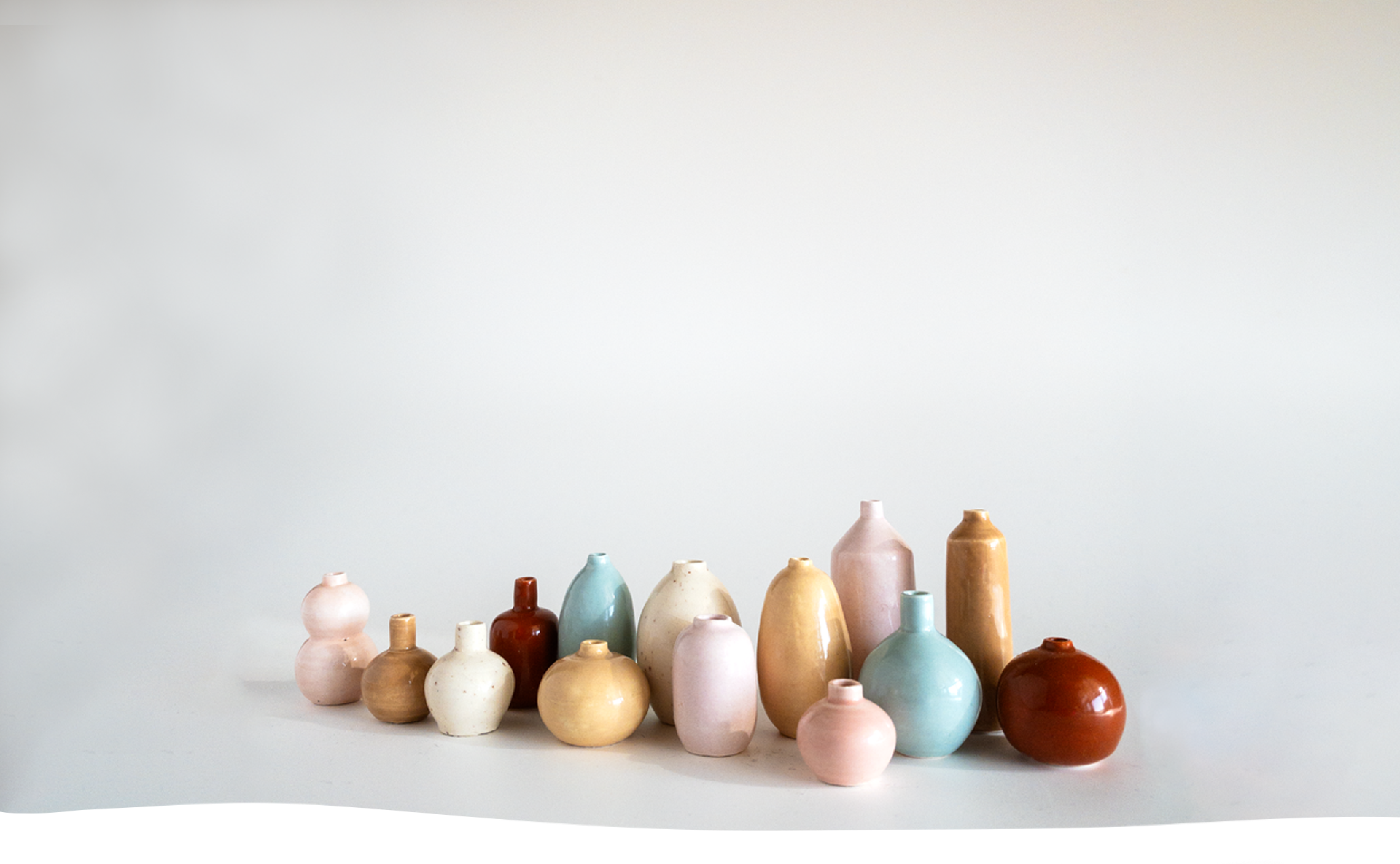
The result? Pieces that range from pinkie-height to about espresso cup size. Small, but real thrown pottery — centered, shaped, and trimmed on a spinning wheel, just like the full-size version.
At The Mini Pottery Studio in Toronto, the mini wheels are custom-imported from a niche vendor in Britain. They're purpose-built for the miniature scale, not just downsized hobby wheels.
Mini Wheel vs. Full-Size Wheel: What's the Difference?
Mini Pottery Wheel | Full-Size Pottery Wheel | |
|---|---|---|
Wheel size | Tabletop, ~6" wheel head | Floor-standing, ~14" wheel head |
Clay amount | Small ball (fits in your palm) | 1-3 lbs per piece |
Piece size | Pinkie to espresso cup | Mugs, bowls, vases |
Learning curve | Easier to center, faster to learn | Steep — centering takes practice |
Session length | Finish 3-5 pieces in 2.5 hours | May finish 1-2 pieces in 2-3 hours |
Mess level | Minimal — small clay, small splashes | Expect clay on your arms, clothes, face |
Best for | Beginners, kids 8+, date nights, groups | Serious hobbyists, functional ware |
Typical class price | $79–$99 CAD | $80–$150+ CAD per session |
The biggest advantage of the mini wheel: you spend more time making and less time struggling. On a full-size wheel, beginners often spend the entire first session just trying to center the clay. On a mini wheel, centering takes a few minutes — then you're pulling walls and shaping pieces for the rest of the class.
What Happens in a Mini Pottery Wheel Class
Here's what a typical session looks like at The Mini Pottery Studio's Taster Class — the most popular intro to mini wheel throwing in Toronto.
Before Class
You walk into a cozy studio in North York's Willowdale neighbourhood at 4909 Yonge Street, Unit 2 — a short walk from Sheppard-Yonge station on the Yonge corridor. The space is small on purpose. Classes max out at 10 people, so it feels intimate, not industrial.
No experience required. No materials to bring. Just show up in clothes you don't mind getting a little dusty (clay washes off easily) and trim your nails short — long nails get in the way of shaping clay.
The Demo (First 20-30 Minutes)
Your instructor demonstrates the full process on a mini wheel: centering a small ball of clay, opening it, pulling up the walls, and shaping it into a tiny vessel. You'll learn the hand positions, the pressure, the speed — everything you need to start throwing on your own.
The instructors at MPS include Cielo Vianzon, the studio's co-founder and a miniaturist artist who appeared on Netflix's Best in Miniature and has done brand commissions for Sephora Canada, Zara Home, and Fenty Beauty. She knows miniature work at a level most instructors don't.
Hands-On Throwing (About 2 Hours)
Then you're at your own wheel. The clay is small — a ball that fits in your palm — so there's less to wrestle with. You'll center it, open it up, and try to pull it into a shape. Your first attempt might wobble. Your second will be better. By your third or fourth piece, you'll start to feel the rhythm.
Most people make 3 to 5 pieces in a single session. Some are wobbly, some are beautiful, and the imperfections are part of the charm. The instructor walks around the room, helping you correct form, suggesting techniques, and occasionally saving a piece that's about to collapse.
After Class
You choose your 2 favourite pieces to keep. The studio trims, glazes, and fires them for you — a process that takes 3 to 4 weeks. Then you come back to pick them up, transformed from chalky grey clay into glossy, finished pottery.
Want to keep more than 2? You can purchase additional pieces at checkout.
Not sure what glazing and firing actually involves? We wrote a beginner's guide to glazing and firing that walks through the whole process.
What You'll Actually Make
The pieces are small — that's the whole point. Think:
Tiny planters for succulents
Espresso cups or shot glasses
Ring dishes and jewellery holders
Small vases for a single stem
Decorative bowls for your desk or shelf
They're not miniatures in a dollhouse sense. They're functional, usable pieces at a smaller scale. Some people display them. Some actually use them. All of them make surprisingly good gifts.
Who Is a Mini Pottery Wheel Class For?
Complete beginners. If you've never touched clay, the mini wheel is the gentlest entry point. Less clay to fight, faster results, and a guided instructor walking you through every step.
Kids (ages 8+). The Taster Class welcomes kids 8 and older when accompanied by a parent. The smaller scale is actually easier for small hands.
Couples and date nights. The studio also runs a dedicated Clay Date for 2 — an intimate session for up to 5 couples. You make pieces together and take home 4 as a pair. It's one of the most popular classes and regularly has waitlists.
Groups and team outings. With 10 spots per class, it's a natural fit for birthday parties, team events, or friend groups looking for something that isn't another dinner.
People who tried pottery at home. Bought a mini wheel off Amazon and found it harder than expected? A guided class teaches you the fundamentals that YouTube tutorials skip. We wrote about setting up pottery at home if you're curious about that path too.
Class Details at a Glance
Class | Taster Class: Introduction to Mini Pottery Wheel |
Price | $99 CAD per person (all materials included) |
Duration | 2.5 hours |
Class size | Max 10 people |
Age | 8+ (kids must be accompanied by a parent) |
Experience needed | None — completely beginner-friendly |
What you keep | 2 finished pieces (trimmed, glazed, and fired) |
Pickup | 3–4 weeks after class |
Location | 4909 Yonge St, Unit 2, North York (near Sheppard-Yonge station) |
What to wear | Clothes you don't mind getting a little dusty |
What to bring | Nothing — all tools and materials provided |
What Makes The Mini Pottery Studio Different
Toronto has dozens of pottery studios. Most of them use full-size wheels and focus on traditional wheel throwing or handbuilding. The Mini Pottery Studio is Toronto's first (and only) studio focused entirely on mini ceramics.
A few things that set it apart:
Custom mini wheels from Britain — purpose-built for the miniature scale, not generic hobby wheels
Small class sizes (max 10) — you actually get instructor attention
All materials included — clay, tools, glazing, firing. No hidden costs.
Food-safe glazes — pieces that are functional, not just decorative
Subway accessible — 2-minute walk from Sheppard-Yonge station
Founded by a professional miniaturist — Cielo Vianzon's Netflix and brand work means the instruction quality is a step above hobby-level teaching
Curious how mini wheel throwing compares to handbuilding? Read our breakdown of handbuilding vs. wheel throwing to decide which technique fits you best.
Frequently Asked Questions
Do I need any experience to take a mini pottery wheel class?
No. The Taster Class is designed for complete beginners. Your instructor demonstrates everything step by step, and you'll have hands-on guidance throughout the session. Most people who book have never touched a pottery wheel before.
What's the difference between a mini pottery wheel and a regular pottery wheel?
A mini wheel is a compact tabletop version of a full-size wheel. The clay is smaller, the pieces are smaller, and the learning curve is gentler. You'll use the same fundamental techniques — centering, opening, pulling — just at a miniature scale. It's less physically demanding and you finish more pieces per session.
How much does a mini pottery wheel class cost?
At The Mini Pottery Studio in Toronto, the Taster Class is $99 CAD per person. That includes all materials, tools, glazing, and firing of your 2 chosen pieces. No extra fees.
What age is appropriate for a mini pottery wheel class?
The Taster Class accepts ages 8 and up. Kids under 18 must be accompanied by a participating parent. The smaller scale actually works well for children's hands.
What should I wear to a pottery class?
Wear clothes you don't mind getting a little dirty — though mini wheel throwing is far less messy than full-size pottery. Clay washes out of most fabrics. Avoid loose sleeves that might drag through clay. Trim your nails short before class.
What happens to my pieces after class?
You choose 2 pieces to keep. The studio trims, glazes, and kiln-fires them for you over the next 3 to 4 weeks. You'll get a notification when they're ready for pickup. The finished pieces are food-safe and durable.
Can I come with my partner as a date night?
Absolutely. You can book the regular Taster Class together, or try the Clay Date for 2 — a dedicated couples session where you make pieces together and keep 4 as a pair ($200 per couple).
Is there parking near the studio?
The studio is at 4909 Yonge St, Unit 2, in North York. Street parking is available on Yonge and surrounding side streets. The studio is also a 2-minute walk from Sheppard-Yonge station (TTC Line 1 and Line 4).
Ready to Try It?
The Taster Class runs multiple times per week with morning, afternoon, and evening sessions. Class sizes are small and popular times sell out, so booking ahead is a good idea.
Book a Mini Pottery Wheel Class →
Want to see all available classes, including handbuilding workshops, matcha bowl sessions, and couples date nights? Browse all classes.