

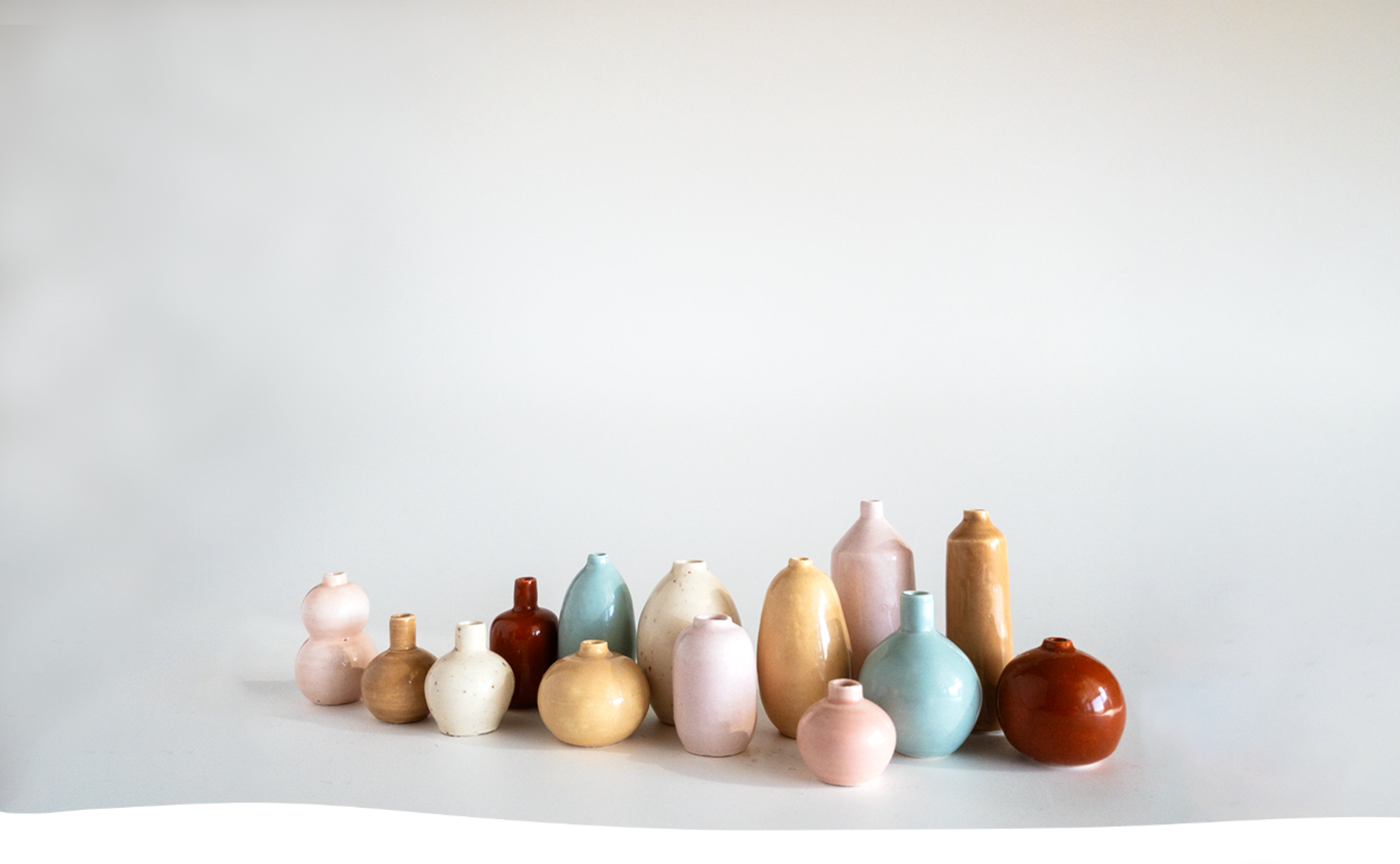


A mug small enough to rest in your palm looks effortless in a photo. Ask the person who made it, and they'll tell you it took more care than a full-size one. Miniature pottery uses the same clay, kilns, and glazes as any other ceramics, yet every flaw shows up faster at a fraction of the size. That tension is what draws makers to the craft, and it is worth understanding before you try it. Mini Pottery Studio grew out of founder Cielo Vianzon's background in miniature art, so the subject sits close to home here. This article explains what the craft involves, how pieces are made, and where a beginner can start.
What Counts as Miniature Pottery?
Miniature pottery is ceramic work made at a deliberately small scale, shaped from clay and then dried, fired, and glazed like any other pottery. There is no official size cutoff. A piece counts as miniature when its small scale is the point rather than an accident.
The term covers a few overlapping kinds of work:
Scaled replicas: a vase or teapot reduced to a fraction of its usual size.
Small functional pieces: dishes, cups, or pots that can still hold a pinch of salt.
Decorative and wearable items: display pieces, charms, and ceramic jewelry.
Mini ceramics is the term that leans toward the clay and kiln work, while miniature art is the broader tradition that also includes tiny paintings and sculpture. Miniature pottery sits where the two overlap.
How Miniature Pottery Differs From Full-Size Pottery
The materials stay the same, but small scale changes how clay behaves and how much room you have for error. Thin, compact pieces lose moisture quickly, and a flaw that disappears on a dinner plate becomes the first thing you notice on a piece the size of a walnut.
Full-size pottery | Miniature pottery | |
Clay needed | A substantial amount per piece | A small amount, often less than a golf ball |
Tools | Standard ribs, loops, and sponges | Fine tools and fingertips, sometimes a toothpick or needle tool |
Drying | Gradual, with more time for adjustment | Faster, so uneven drying is a bigger risk |
Mistakes | Often forgiving and easy to smooth out | Visible straight away and harder to correct |
Detail | Moderate, with room to refine | Fine and precise, with little margin |
Glazing | Thicker coats are workable | Thin, controlled coats help preserve detail |
None of this makes miniature work out of reach for beginners. It simply asks for a lighter touch and a bit more patience.

How a Miniature Piece Is Made, Step by Step
Every miniature piece follows the same path as full-size ceramics, though small forms are usually shaped by hand rather than on a wheel. Here is the general process:
Prepare the clay. Knead, or wedge, the clay to remove air pockets and even out its texture. Trapped air can cause cracks or damage during firing.
Shape by hand. Pinching, coiling, and slab work suit small forms well. If you want to understand how these methods compare with the wheel, this guide to handbuilding versus wheel throwing covers the differences.
Refine the details. Fine tools smooth surfaces, sharpen edges, and add texture.
Dry slowly. The piece dries to a stage called greenware, which is fragile and needs gentle handling. Slow, even drying helps prevent warping and cracks.
Bisque fire. A first kiln firing hardens the clay and makes it ready for glaze.
Glaze. Apply thin, controlled coats so the glaze does not blur fine detail.
Final firing. A second firing melts the glaze into a smooth, durable surface.
Small pieces are unforgiving at the drying and glazing stages in particular, so patience at those points matters more than speed.
Why Small Scale Is Harder Than It Looks
Beginners often assume that less clay means less difficulty. In practice, the margin for error shrinks along with the piece. These are the problems that come up most often, along with ways to handle them.
Fragility. Thin walls, handles, and tiny rims crack or snap during handling. Lift pieces with your whole hand rather than pinching an edge, and keep walls slightly thicker than your instinct suggests.
Over-glazing. A coat that looks right on a mug can swallow fine detail or pool in a small recess. Apply thin layers and let each one settle. Our beginner's guide to glazing explains how glaze behaves and how to control it.
Uneven drying. A small piece can dry unevenly, and thin sections dry faster than thick ones. That mismatch is a common cause of warping. Keep the piece out of drafts and away from direct heat while it dries.
Oversized fingers. Hands and tools feel clumsy at this scale. Work slowly, use a fine tool for detail, and accept that early attempts will look rougher than you planned.
Most of these problems come down to patience rather than talent, and they get easier with repetition.
Where Miniature Ceramics Show Up
Small-scale clay work turns up in more places than most people expect. The pieces fall into a few broad groups:
Collectible and display pieces. Tiny vases, bowls, and scenes made to sit on a shelf or in a cabinet, often in the tradition of miniature art.
Small functional items. Ring dishes, trinket pots, tiny cups, and incense holders that are small but still useful.
Wearable ceramics. Earrings, pendants, and charms, where the small scale is part of the design. Anyone curious about this side of the craft can explore the ceramic jewelry workshop at the studio.
Pieces for other hobbies. Mini ceramics also appear in dollhouse displays, model scenes, and handmade gifts.
What these groups share is a close, detailed way of working. The same patience that suits a tiny vase applies to a pair of earrings.
Trying Miniature Pottery as a Beginner
Curiosity is a good enough reason to start. The practical question is where to begin, and the answer depends on what appeals to you most.
Start here if you want to learn the basics. A beginner pottery class teaches you how to handle clay with an instructor beside you, which makes the later fine-detail work far less frustrating. Our guide to what to expect at a first pottery class walks through the experience.
Start here if small wearable pieces interest you. The ceramic jewelry workshop, linked earlier, focuses on a scale close to miniature work.
Start here if you want regular practice. Once you are comfortable with clay, Open Studio sessions give you a place to keep working on your own projects.
Set realistic expectations for the first attempt. Early pieces tend to look rougher than the ones you have admired, and that is part of learning. Build confidence on simple handbuilt forms before attempting fine detail.
TRY SMALL-SCALE CLAY FOR YOURSELF
Browse current beginner-friendly classes at Mini Pottery Studio.
Miniature Pottery FAQs
What is miniature pottery?
Miniature pottery is ceramic work made at a deliberately small scale. It is shaped from clay, dried, fired, and glazed like full-size pottery, but the small size demands finer tools and more careful handling.
Is miniature pottery harder than regular pottery?
In some ways, yes. Small pieces dry quickly, break easily, and show flaws more clearly. Less clay does not mean less difficulty, but a lighter touch and patience make it manageable.
Can beginners make miniature pottery?
Yes. Simple handbuilt forms such as pinch pots are a sensible starting point. Learning basic clay handling first makes fine detail work easier later.
What clay is used for miniature pottery?
Many makers use the same kilnfired clay bodies as full-size work, often a fine-textured type that holds detail. The best choice depends on the piece and the firing temperature.
Do miniature ceramics need to be fired in a kiln?
Fired ceramics do, because the kiln is what hardens clay into durable pottery. Air-dry clay needs no kiln, but it is a different material and is not as durable or water-resistant.
How long does it take to make a miniature ceramic piece?
It varies. Shaping may take an hour or less, but drying, bisque firing, glazing, and final firing add days or weeks overall. Hands-on time is only a small part of the process.
Conclusion
Miniature pottery asks for the same skills as any ceramics, applied with a lighter hand: patient shaping, slow drying, and thin, careful glaze. The small scale makes mistakes obvious, but it also makes the craft approachable to start. A few simple pieces will teach you more about how clay behaves than any amount of reading.
If you would like to try it with guidance, a beginner pottery class at our North York studio is a practical first step.